Gravity, and Then Fracture
Published:
Recently, we proposed a new sharp theory for describing how cracks nucleate and propagate in elastic brittle materials. I’m saving the details of that work for a future post, but if you’re curious, you can find the preprint here: https://doi.org/10.48550/arXiv.2608.28326.
As we came close to finishing the paper, we became interested in applying the theory to a more complex and still underexplored question: how can body forces break a piece of material? That question is the focus of this post. Because the theory does not prescribe how a load must be applied, whether through Dirichlet or Neumann boundary conditions, or as a body force, we included an example of body-force-driven fracture. But that raised an important question for us: is this behavior supported by experimental evidence?
The answer is not straightforward. In everyday settings, gravity is a relatively weak force, so observing its effect on fracture requires a very large specimen; at smaller scales, other loading conditions can easily dominate. A few studies have addressed this challenge using centrifugal forces, but such experiments can still be difficult to carry out.
In our new work, we propose an accessible experimental setup that can be carried out in a typical laboratory without specialized infrastructure. You can read the paper here: https://doi.org/10.1016/j.eml.2026.102545. The idea is to use a cantilever beam with a downward-pointing V-notch and load it only through its own weight. One end is initially held by a rigid support, which is then lowered. As the support moves, we expect cracks to nucleate at the tip of the V-notch and propagate in a controlled way, before the beam reaches a state in which it is supported by its own weight. The preprint has the full experimental details; here is a photograph of the beam after fracture:
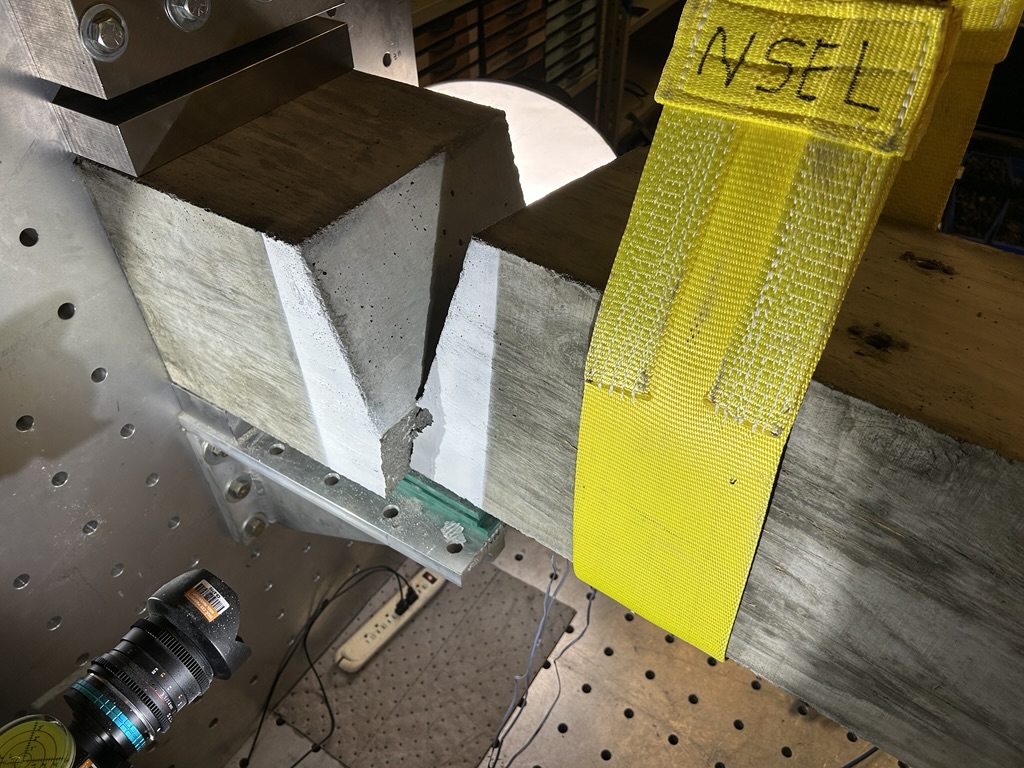
Comparing the experiment with the theory—and seeing it capture the nontrivial crack path—was a great source of excitement for us. We were also glad to find that the setup is simple enough to be used in many laboratories and adapted to different materials.
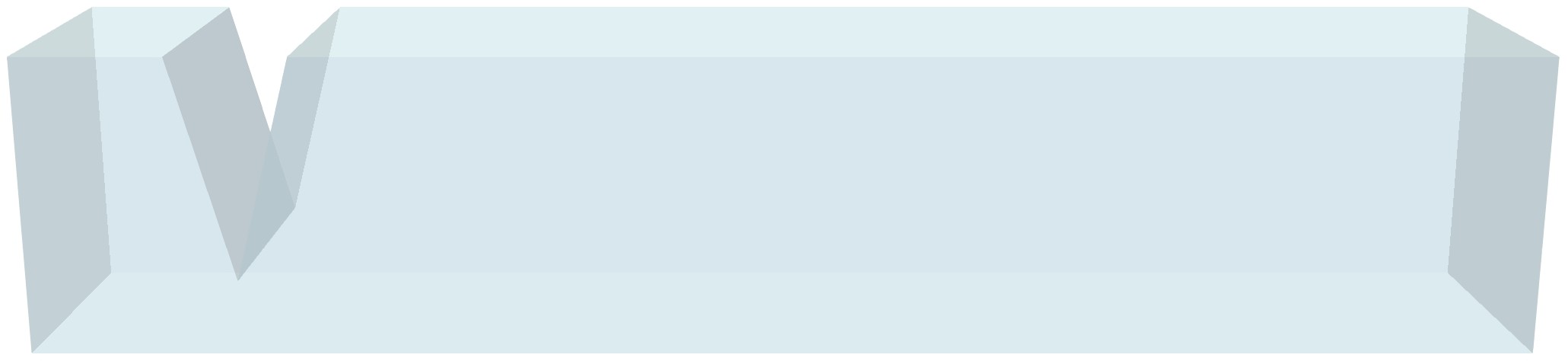
Body-force-driven fracture also appears in nature. One example is the fracture of ice and glacier calving, an important process in climate studies. In the paper, we propose a specimen that could help researchers study how ice fractures under its own weight in a controlled way. I hope this work encourages more experimental and theoretical studies of fracture under body forces. We’re looking forward to seeing where this line of research leads. Here is an illustration of what the ice specimen could look like: